
Dearborn County Wanted List
The Dearborn County Sheriff's official Most Wanted page is the natural first stop. On review, though, it held no named people at all. Visitors found only a generic placeholder saying wanted information would appear there, and the underlying content had last been touched in 2023. So the page should not be read as a working roster of every active Dearborn County warrant.
A blank page clears no one, of course. Most warrants never make it onto a public wanted feature, and the county offers no official self-service warrant portal. The placeholder included no mugshots, no warrant numbers, no update schedule, and no reward details. Check the live page in case it changes. For a specific concern, the court, your attorney, or the Sheriff's Office can confirm what actually stands.
A wanted notice or warrant states a legal basis for an arrest. The issuing authority is the only source that can confirm identity and whether it is still active.
Open the official wanted interface before relying on a repost.
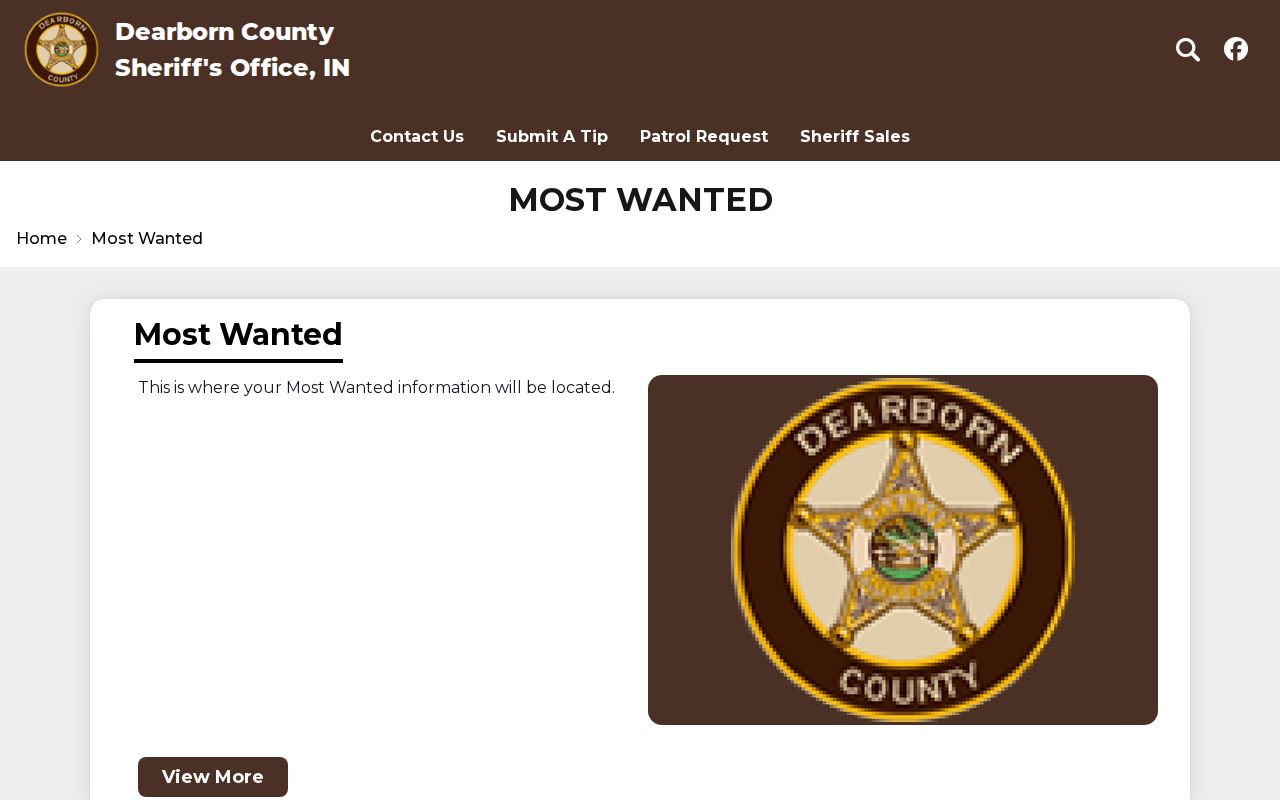
Screenshots of the page document its interface only. They cannot show whether any person has or lacks a warrant.
Dearborn Wanted Listing Fields
If the Sheriff later fills the page in, trust only what the agency publishes. A standard mugshot card may not be the format chosen. For now, the placeholder offers none of the usual person details.
| Possible field | Reviewed status |
|---|---|
| Name | Not present |
| Photograph | No person photograph displayed |
| Charge | Not stated |
| Warrant number | Not stated |
| Reward | No program stated |
A listing that appears later can vanish after an arrest, a recall, a correction, or a routine edit. Removal alone says nothing about how the court case ended. Indiana MyCase covers filed counts, hearings, orders, and judgments whenever the case is public.
Read Dearborn Notices Safely
Begin with the sheriff-hosted page rather than a copied social media post. Keep three things separate: the wanted feature, current custody data, and the court record. Each answers a different question.
- Open the official Most Wanted page and see whether a real person-level notice appears.
- Match more than a name. Use only agency-supplied identifiers, without judging appearance.
- Never approach, confront, follow, or try to detain anyone.
- Send observations through the official tip route. Call 911 for immediate danger.
- After a reported capture, check the Dearborn County roster and booking paths, then use MyCase for the outcome.
A roster match means the person sat in county custody at the listed time. It settles nothing more. A quick release can pull the card down while the case still moves through court.
Check a Dearborn County Warrant
Dearborn County has no public warrant-search tool. Neither the sheriff nor the county sitemap offers one. The Most Wanted placeholder can't fill that gap. MyCase sometimes shows a warrant docket entry in a public case, but that isn't a clearance system. Court rules, sealing, or expungement can limit what appears there. So a clean name proves nothing about live warrant status.
- Gather the full legal name and, if known, the Dearborn County cause number.
- Search MyCase, confirming the county and identifiers before reading an entry.
- When the concern affects the person directly, contact a lawyer or the court named in the case.
- Call Sheriff dispatch at (812) 537-3431 for direction on its confirmation procedure.
- Follow the court or agency’s instructions to arrange a lawful response.
Treat this path as a way to resolve a concern, not dodge it. Court staff can explain procedure. They can't give legal advice. A lawyer, though, can size up the case and speak with the issuing court when that helps.
Note: Only the responsible court or law-enforcement agency can confirm whether a Dearborn County warrant remains active.
Dearborn Warrant Types Explained
The label attached to an order shapes which office can explain your next step. Keep these plain-language descriptions general in mind. The actual order always controls.
| Term | General meaning | Verification |
|---|---|---|
| Arrest warrant | A judge authorizes arrest on the basis presented. | Issuing court, counsel, law enforcement |
| Bench warrant | A court order often tied to a missed appearance or directive. | Court clerk and counsel |
| Wanted notice | An agency publicizes a selected person sought. | Agency and issuing authority |
| Docket entry | A case-history line that may mention an order. | MyCase followed by the court |
The public list is curated. It's far narrower than the full set of court orders. It may lag behind a recall or an arrest. An unofficial repost of the list is never the final word.
Send Dearborn County Tips
The Sheriff's Submit a Tip form asks for a short narrative plus the date and time of the incident. Name, email, and phone are optional. Optional fields don't guarantee anonymity, though, so don't count on it. No reward terms are published either. Expect nothing, and promise nothing.
Dearborn County Sheriff’s Office301 W. High Street
Lawrenceburg, IN 47025
Main office/jail: (812) 537-8700
Dispatch: (812) 537-3431
Toll-free dispatch: (800) 543-1149
Give useful facts: where and when you saw the person, which way they went, and any immediate hazard. Never follow someone just to gather more detail.
Visit the official Sheriff tip form for non-emergency information.
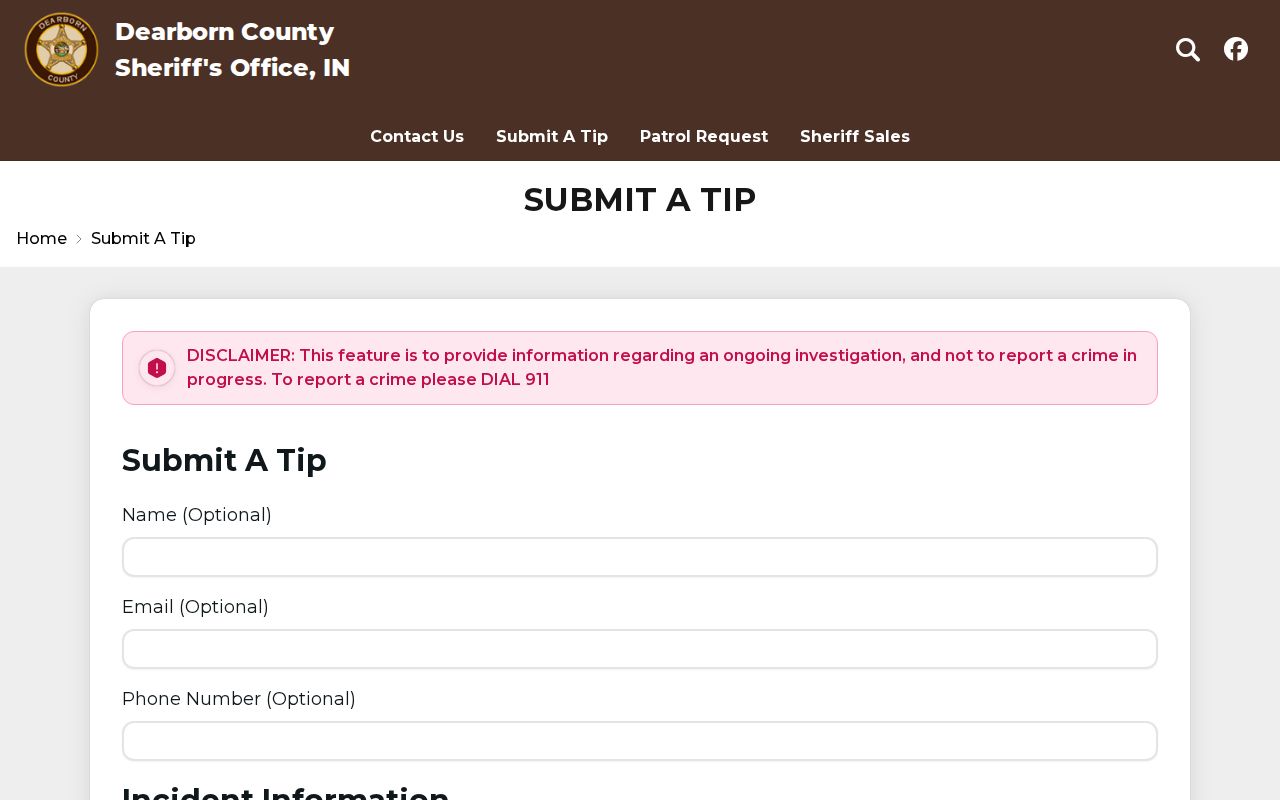
The form routes tips straight to law enforcement. It is not a records request or a warrant-clearance service.
Never approach someone named in a wanted notice. If danger is immediate, call 911. Save the form for non-emergency facts.
Dearborn Sheriff App Limits
The official "Dearborn Co Sheriffs Office IN" app is downloadable through Apple and Google Play. Its OCV modules cover inmate search, jail information, Most Wanted, tips, agency contacts, and public-safety news. In short, it's a handy phone doorway into the sheriff's whole ecosystem.
Don't mistake a module label for complete data, though. A Most Wanted tab doesn't set a posting schedule. It doesn't create a reward or build a warrant database. App content can also drift out of sync with the web page. For emergencies, dial 911 rather than relying on the app.
Wanted Status After Arrest
Once an arrest happens, the picture shifts. The name drops from the wanted list. It lands in the county custody system instead. From there, the Sheriff's inmate search becomes the tool to watch. That search can display a booking card with a photo, the booking time, the arresting agency, and the listed charge while the person sits in custody. One catch: the roster tracks current inmates only. A quick release or a transfer can pull the card without explanation.
For what happens next, MyCase fills in the rest. A wanted notice and a booking line only capture the start of a matter. The case file shows filed counts, hearings, counsel, bond orders, later filings, and the final judgment. Cases move in ways a roster never reflects, ending through diversion, acquittal, or conviction. A missing case has innocent explanations too, from confidentiality and sealing to expungement or filing in another jurisdiction.
Verify Identity Before Reporting
Common names and old reposts create risks. Compare only identifiers an official notice gives and report an observation as a tip, not a public accusation. Do not post home addresses, family details, or a live location online. Law enforcement can assess a match and whether the warrant remains valid.
Separate direct observation from assumption. State what was seen, where, when, and why the official notice may match. Avoid guesses about guilt, motive, destination, or associates. If danger is present, call 911. The sheriff’s web form is only for non-emergency facts.
Records Requests and Warrants
Filing a public-record request is the slow way to answer a personal warrant question. Indiana law covers records that already exist. Even so, confidentiality rules and investigatory-record discretion can limit what an office releases. No request can force a clearance certificate into being. Nor can it squeeze legal advice from a records clerk.
The county request route fits a different job. It works for pulling an identifiable public document when ordinary timing is fine. Name the cause, the date range, and the agency involved. When the question is live status or a lawful response, turn to counsel, the issuing court, or the Sheriff's own procedure.
Dearborn Court Follow-Through
Finding a docket is just the start. Read the full case summary straight through. Don't stop at the warrant entry. Later orders can recall the warrant, adjust bond, record an appearance, or resolve the filed charge, and any of those details can change the picture. Check the name, county, and cause number before trusting anything. Screenshots and search-engine snippets may lag well behind the live court system.
Plenty of records never appear online. Juvenile, confidential, sealed, and expunged matters carry access limits. Online coverage does not always reach backward, either. The clerk can explain access procedure but cannot tell you how to handle the case itself. That line between procedure and advice is exactly why a personal warrant concern belongs with counsel.
Public Record Search
Sponsored Results